
If you wake up to a warm house and a frozen AC, you are not alone. I have seen this pattern across Florida for years. The system runs fine during the day, then night falls and the evaporator coil turns into a block of ice. By morning the thermostat is still calling, the blower sounds weak, and the supply vents barely move air. The good news is this is a fixable problem. Once you know why ice forms after dark, you can take a few safe steps right now and then let us correct the root cause so it does not come back.
Why ACs Freeze Overnight In Florida
An air conditioner freezes when the evaporator coil drops below the freezing point and the airflow that carries heat across that coil is weak. Nighttime conditions make that easier to happen. Outdoor air cools down, indoor humidity stays high, and many thermostats drop set points at bedtime. If airflow, refrigerant metering, or charge is off, the coil gets too cold, moisture on the fins turns to ice, and airflow falls even more. That is a runaway train. More ice, less air, colder coil, and soon you have a solid freeze.
The simple physics in plain English
- The coil needs heat from indoor air to stay above freezing
- If not enough warm air crosses the coil, the coil temperature drops
- Moisture in the air condenses on the coil first, then freezes when the coil gets too cold
- Ice blocks airflow even more, which makes the coil colder, and the cycle accelerates
Common Causes We Find On Night Freeze Calls
Dirty or restrictive filters
A clogged filter starves the coil of air. One inch pleated filters load fast in our climate, especially with pets. If you use a high MERV filter without a media cabinet, the blower may struggle even when the filter looks clean.
Closed or blocked supply and return vents
Bedrooms with closed doors and closed registers cannot breathe. The blower pulls hard on the return, pressure rises, and airflow across the coil drops.
Dirty evaporator coil or blower wheel
Dust and film on the coil fins act like a blanket. A dirty blower wheel moves less air at the same speed. Together they reduce heat transfer and invite icing, especially at night when set points drop.
Low refrigerant charge or metering problems
A system that is low on refrigerant or has a sticking metering device can run a coil colder than it should. Low charge often shows up first as a night freeze because heat load is lighter after dark.
Fan set to On between cycles
Running the fan when the compressor is off blows across a wet coil. That can re evaporate moisture into the house during the day, then leave the coil wetter and colder at night.
Oversized equipment and short cycles
A big system cools fast and shuts off. It never pulls much moisture. Rooms feel clammy, the thermostat drops lower at night to feel comfortable, and the cold coil ices up with weak airflow.
Return leaks in the attic
A gap on the return side pulls hot humid attic air. That moisture loads the coil heavily. When the set point drops at bedtime, the coil tips below freezing.
Low blower speed or high static pressure
Ducts that are undersized, kinked, or crushed raise static pressure. The blower cannot move enough air. Ice follows, often starting on the lower third of the coil.
What You Can Do Right Now
These steps are safe for homeowners and can get you through the night while the system thaws.
Turn cooling off and set the fan to Auto
Shut the system off at the thermostat for 4 to 6 hours, fan on Auto. If you need faster thawing and you are present, you can run the fan in On for 30 to 60 minutes to push room air across the coil, then switch back to Auto. Do not run the compressor while the coil is frozen.
Replace the filter
Install the correct size filter. Make sure it fits snug with no gaps around the edges. If your filter looks clean but you freeze often, you may need a lower resistance media cabinet rather than a one inch high MERV filter.
Open supply and return vents
Open every supply register fully. Move furniture and rugs off returns and supplies. Crack bedroom doors to let air return freely.
Nudge the set point up a degree or two at night
While you wait for service, avoid big nighttime setbacks. A one or two degree drop is plenty. Oversized or borderline systems stay happier with steady settings.
Check the condensate line for flow
If you have a cleanout tee, confirm a steady drip outside when the system runs again. A slow drain keeps the coil area wetter and encourages icing.
If ice comes back within a day or two, stop and call. Repeated freeze thaw cycles can damage the compressor.
How We Diagnose Nighttime Freeze Problems
We do not guess. We measure and inspect in a way that points straight to the fix.
Interview and quick walk through
We ask when the freeze happens, what rooms struggle, and how you set the thermostat at night. We look at doors, vents, and the filter rack.
Evaporator coil and blower inspection
We open the cabinet, check for frost patterns, soil on the coil face, and debris on the blower wheel. We verify that the coil drains and that the pan and trap are clean.
Airflow and static pressure
We measure external static pressure and compare to the blower chart. High static tells us to look for crushed flex, closed dampers, or a filter that is too restrictive.
Refrigerant and metering checks
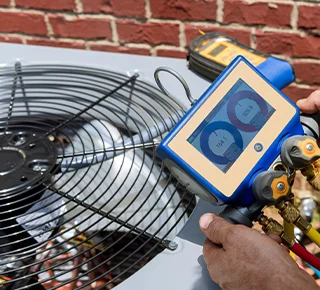
We measure superheat and subcooling, compare to manufacturer targets, and watch pressures as outdoor temperature changes. Low charge or a TXV issue shows up clearly.
Duct and return leak testing
If the return is pulling attic air, we find it with smoke or pressure testing. Leaky returns are a top cause of wet coils and icing in Florida.
Control and fan settings
We check thermostat programs, confirm fan behavior at the end of a cycle, and verify that any dehumidify features are set correctly for our climate.
Repairs That Solve Night Freezing For Good
Coil and blower cleaning
A proper coil clean with the right chemistry restores heat transfer. Cleaning the blower wheel often brings back a surprising amount of airflow.
Correct the filter system
We install a sealed media cabinet with a 4 to 5 inch filter. You get strong filtration with low resistance, which keeps airflow healthy and protects the coil.
Seal the return and fix duct restrictions
We mastic seal the return box, filter rack, and cabinet seams. We repair or replace crushed flex, add hangers, and open closed dampers. If the system is starving, we add a return.
Set blower speed and verify static
We set the blower to the correct speed for your duct system and comfort goals, then recheck static pressure to confirm.
Repair charge or metering
We find and repair leaks, set the correct charge, or replace a faulty TXV or metering device when needed.
Program controls for Florida humidity
We disable aggressive circulate modes, keep fan Auto as the default, and enable any supported dehumidify logic that slows the fan at the end of a cooling call to dry the coil.
Address oversizing when replacement is due
If the equipment is oversized and aging, we plan a right sized, variable speed replacement matched to your ductwork. Longer, quieter cycles control moisture and prevent icing.
How To Keep It From Coming Back
- Check filters monthly and change on schedule
- Keep all supply and return vents open and clear
- Leave bedroom doors slightly open at night if returns are weak
- Use Auto for the fan unless your system has a supported dehumidify feature
- Avoid large night setbacks, try one to two degrees instead
- Schedule an annual coil and drain service before peak heat
- Seal return leaks and consider a media cabinet to lower resistance
- Watch indoor humidity with a small hygrometer, aim for fifty percent
What Not To Do
- Do not chip ice off the coil with tools, fins bend easily and leaks follow
- Do not run the compressor while ice is on the coil, you can slug the compressor
- Do not rely on scented sprays to hide musty smells from freeze thaw cycles
- Do not stack two filters to increase filtration, you will starve the blower
- Do not set the fan to run full time to dry the coil unless controls support it
Frequently Asked Questions
Why does it only freeze at night
Cooler outdoor temperatures lower system pressures. If airflow is marginal or charge is low, the coil crosses the line into freezing overnight when load drops and set points go lower.
Can low refrigerant cause a freeze even with a clean filter
Yes. Low charge reduces evaporator pressure and temperature. That can take a clean coil below freezing. We confirm with superheat and subcooling readings.
My filter looks clean, could it still be the problem
It can. Some high MERV one inch filters are very restrictive, even when new. A deep media cabinet gives you strong filtration with low resistance.
Is it safe to run the fan to thaw the coil
Yes, for a short period while the compressor is off and you are present. Once ice clears, return the fan to Auto so the coil can drain between cycles.
If the AC is oversized, is there a temporary fix
We can improve airflow, seal returns, and program controls to limit short cycling. A whole home dehumidifier can also steady humidity. The permanent fix is right sized equipment matched to your ducts.
The Bottom Line
An AC that freezes overnight is telling you something. Airflow is down, charge or metering is off, the return is leaking, or the system is oversized and cycling wrong for our humidity. Start with safe thaw steps and a new filter. Then let us inspect the coil, blower, charge, ducts, and controls. Once we correct the real cause, your system will run steady through the night without icing, your air will feel drier, and the power bill will make more sense.
Call Florida Air, Inc.
If your AC is freezing at night or you are tired of waking up to a warm house, we can help. Call Florida Air, Inc. for a fast diagnostic, a proper coil and drain service, and repairs that stop icing for good. We offer after hours emergency service, free in home estimates on new systems, and a 30 day warranty on service repairs. Ask about our maintenance plans and our 10 year parts warranty on new installations. Your comfort is our business, and we are your hometown team for hometown service.