
If your house feels sticky even when the thermostat says you are at the right temperature, you are fighting humidity, not just heat. I see this every summer across Central Florida. The AC runs, the bill climbs, yet the air still feels heavy. That is a sign your system is carrying a moisture load it was never meant to handle alone. A properly sized whole home dehumidifier takes that extra load off your air conditioner, keeps indoor humidity in the healthy range, and protects the parts of your home that do not like moisture.
In this guide, I will explain what a whole home dehumidifier does, why it is different from a portable unit, when it makes sense, and how we install and maintain them so they work with your air conditioner, not against it.
Why Humidity Is Half The Battle In Florida Homes
Air conditioners cool and dehumidify at the same time, but they are designed first to manage temperature. We call that sensible cooling. Moisture removal is the latent side of the job. When humidity is high for long stretches, the AC has to run longer and harder just to wring water out of the air. That raises energy use and can still leave your home at sixty percent relative humidity or higher. Most families feel best between forty five and fifty five percent. Above sixty, you get clammy air, dust mites are happy, and mold risk climbs on surfaces and inside ductwork.
A dedicated dehumidifier picks up that latent load. Your AC can focus on temperature while the dehumidifier keeps humidity steady without overcooling the house.
What A Whole Home Dehumidifier Actually Does
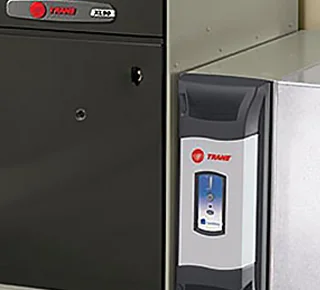
A whole home dehumidifier pulls air from your return duct, removes moisture, and sends that drier air back into the system or into a supply duct. Water it removes drains through a condensate line just like your air handler. The unit runs when the indoor humidity rises above your set point, typically fifty percent. It is quiet, automatic, and built to run many seasons with basic maintenance.
What makes it different from a portable unit
- It treats the entire home by tying into your ductwork
- It drains automatically, so there is no bucket to empty
- It is controlled by a wall mounted humidistat or a compatible thermostat
- It is more efficient per pint of water removed, and it does not add heat to a single room
How A Dehumidifier Protects Your Air Conditioner
Fewer long, hot run times
When humidity is high, your AC spends a good part of each cycle drying the air before it can drop room temperature. A dehumidifier lifts that burden. Your AC reaches set point faster, cycles less, and avoids long periods of high head pressure that are hard on compressors.
Better coil and drain conditions
When indoor humidity stays high, your evaporator coil stays wet longer. That encourages slime in the drain pan and algae in the condensate line. A dehumidifier lowers indoor humidity, so water leaves the coil and pan faster. That means fewer drain clogs and less chance of a musty odor at startup.
Improved comfort at higher thermostat settings
Dry air feels cooler. With a dehumidifier keeping humidity near fifty percent, most folks are comfortable with the thermostat one or two degrees higher. That can shave real dollars off a summer power bill without sacrificing comfort.
Less short cycling on oversized systems
A lot of Florida homes have air conditioners that are a size too large. Those systems cool the air fast and shut off before pulling much moisture. Drier return air from a dehumidifier steadies the space between cycles and helps prevent that cold but clammy feeling oversized systems cause.
How A Dehumidifier Protects Your Home And Belongings
Mold and mildew control
Moist air feeds mold on walls, closets, and around supply vents. Keep indoor humidity below fifty five percent, and you cut growth potential way down. That helps protect paint, drywall, and anything you store in closets and pantries.
Healthier indoor air
Humidity does not carry dust, but it helps dust settle on surfaces and stick to coils and ducts. Lower humidity reduces that sticky feel and helps filters capture particles before they reach the blower and coil.
Flooring, cabinets, and finishes
Wood floors, cabinets, and trim do not love repeated moisture swings. Drier indoor air lowers swelling and cupping risks and helps keep door frames true. You also cut down on that musty smell that can creep into rugs and upholstered furniture.
When A Whole Home Dehumidifier Makes Sense
- Your home averages above sixty percent relative humidity during mild weather when the AC does not run much
- You prefer the thermostat set in the upper seventies but want the air to feel crisp
- You have an older or oversized AC that short cycles and leaves the air clammy
- There are persistent moisture issues in certain rooms, like a bonus room over the garage or a back bedroom with weak returns
- You or a family member have allergies that flare in humid conditions
- You notice sweating on supply vents or around ceiling registers during peak humidity days
Sizing And Selecting The Right Unit
We size a dehumidifier by how many pints of water it can remove per day. Bigger is not always better. The right size depends on square footage, indoor moisture loads, how tight the house is, and how the duct system is laid out. We look at:
- Home size and typical occupancy
- Cooking, laundry, and shower habits that add moisture
- Return and supply locations and duct lengths
- The AC system type, especially if it is variable speed
- Target humidity set point and comfort goals
Most single family Florida homes do well with units in the medium range. Larger homes, homes with big families, or homes with heavy moisture loads from cooking, aquariums, or indoor hobbies may need more capacity or a dual return design.
The Right Way To Install A Whole Home Dehumidifier
Ducted to the return or dedicated return
We can tie the unit into your main return or give it a dedicated return grille in a central hallway. A dedicated return is great when the main return is far from the areas that feel damp. The discharge usually ties into the supply plenum or a trunk so dry air blends evenly through the home.
Proper drain and safety switch
Just like your air handler, the dehumidifier needs a clean, trapped condensate line with a safe place to drain. We add a float switch to protect your home in case of a clog.
Power and controls
Units are hard wired or plugged into a dedicated circuit depending on the model. Control can be a wall mounted humidistat, your existing thermostat if it supports dehumidification, or the unit’s onboard controls. We program the set point and make sure the AC and dehumidifier do not fight each other.
Sealing and insulation
All new duct connections are sealed with mastic and foil tape. Any new duct running through the attic is insulated to prevent sweating. The goal is dry air to the living space without pulling in hot attic air through leaks.
Will It Raise My Power Bill Or Lower It
A dehumidifier uses electricity, so the unit itself has a draw when it runs. The savings come from reduced AC run time and from the fact that you can be comfortable at a slightly higher thermostat setting. In homes that fight humidity for long stretches, that trade often nets out in your favor. Even when the power bill does not drop much, comfort improves in a way you feel every day. Most homeowners notice steadier indoor conditions, fewer long AC cycles, and less stickiness at night.
How It Works With Variable Speed Systems
Variable speed air handlers and heat pumps run longer at lower airflow, which is great for moisture removal. Pairing that with a dehumidifier gives you the best of both. The AC handles temperature and a good chunk of the humidity, while the dehumidifier keeps humidity steady during mild weather or when the AC is not cycling. The key is control logic so the two do not run at cross purposes. We set fan speeds and dehumidify priorities so comfort stays smooth and energy use stays in check.
Common Myths I Hear About Dehumidifiers
“My AC already dehumidifies. I do not need anything else.”
Your AC dehumidifies while it cools. During spring and fall, when temperatures are okay but humidity is high, the AC barely runs and humidity creeps up. A whole home dehumidifier fills that gap.
“A portable unit is the same thing.”
Portable units help in one room. They also add heat to that room, which can trigger the AC and waste energy. A ducted whole home unit treats all rooms and drains on its own.
“They make the house too dry.”
We set a reasonable target, normally fifty percent. The unit cycles on and off to maintain that. You can raise or lower the set point easily.
Simple Maintenance To Keep It Running Right
- Rinse or replace the dehumidifier filter per the manufacturer schedule
- Check the condensate line and cleanout every spring
- Keep the area around the unit clear for airflow and service
- Have the unit checked during your regular HVAC tune up so controls and safeties are verified
Most maintenance is quick, and pairing service with your spring AC tune up keeps costs down and prevents surprise breakdowns.
What To Expect When We Install One
- We start with a quick humidity and airflow check and confirm the right size
- We propose a duct path that reaches the rooms that need help most
- We install the unit, drain, and controls and seal all connections
- We test run, set the humidity target, and walk you through simple maintenance
- We leave you with photos, the model and serial numbers for warranty, and a plain language summary of what we did
Most installs take a single day in a typical single family home. If duct access is tight or we are also sealing returns or adding a media cabinet, we will tell you up front.
Frequently Asked Questions
Where should I set my indoor humidity?
Most Florida homes feel best between forty five and fifty five percent. Fifty percent is a good starting target.
Will a dehumidifier help with mold?
It helps a lot by removing one of mold’s key ingredients, which is moisture. We still treat any existing growth and fix leaks or drainage problems, but steady humidity control makes a big difference.
Can it run with the AC at the same time?
Yes. With proper controls, both can run when needed. We program priorities so they do not fight each other.
Does it make noise?
They are quiet. You will hear a gentle fan if you are near the unit. In most homes, the sound blends with normal background noise.
Will it help a bonus room or room over the garage?
Yes. If that room struggles with humidity, we can run a dedicated return from that area to the dehumidifier or adjust duct balance so it gets more of the dried air.
The Bottom Line
In Florida, dry air is comfortable air. A whole home dehumidifier takes the heavy moisture work off your AC, keeps indoor humidity steady, and protects your home from mold and musty odors. You will notice that sheets feel dry at night, the air feels crisp without turning the thermostat down, and your system does not grind through long cycles just to keep up. Paired with a clean coil, a tight return, and the right filter, a dehumidifier is one of the smartest upgrades you can make.
If your home feels sticky or you want steadier comfort without dropping the thermostat, we can help. Call Florida Air, Inc. for a whole home dehumidifier assessment and a clean, professional install. We offer fast after hours emergency service, free in home estimates on new systems, and a 30 day warranty on service repairs. Ask about our maintenance plans and our 10 year parts warranty on new installations. Your comfort is our business, and we are your hometown team for hometown service.