
At the ten-year mark, most homeowners start wondering if it is smarter to keep repairing the old unit, or to bite the bullet and replace it. I have worked on plenty of systems that were still worth fixing, and I have seen others that ate money for two summers straight. The difference is not luck. It is a few numbers, a little history, and an honest look at comfort. This guide gives you a simple, repeatable way to decide using your power bills and your repair record, so you do not have to guess.
The Three Signals That Matter Most
You do not need fancy tools. Start with these three signals, then we will put them into a clear score.
- Power usage trend, based on your last two summers.
- Repair history, especially parts that repeat or strand you after hours.
- Comfort and humidity, how the house actually feels on peak afternoons.
If two of those three are going the wrong way, replacement often wins on total cost and comfort.
Step 1: Read Your Power Bills The Right Way
We are not chasing a single month. We want a trend you can trust.
Gather the bills
Pull your last 24 months, or at least two full summers. You want kWh, not just dollars, because rates can change.
Normalize for weather
Compare June through September this year to the same months last year. If you can see degree day data on your utility portal, great. If not, use a simple check: if this summer felt similar to last summer and the kWh climbed ten percent or more, the system is likely running less efficiently.
Look for the “late afternoon climb”
If bills jumped even though you do not run the thermostat lower, that hints at weak coils, high static pressure, or a compressor that is losing its edge. All three show up as longer, hotter run times in the late afternoon.
Rule of thumb
- If normalized summer kWh is up 10 to 15 percent year over year with no lifestyle changes, flag it.
- If it is up 20 percent or more, and you also have comfort complaints, replacement moves to the front of the line.
Step 2: List Your Repair History, Not Just The Receipts
Write out the last three years of service with dates and parts. You will see patterns fast.
- Capacitors and contactors: One of each over several years is normal. Repeats within the same season, or paired with burnt wiring, hints at heat stress and high inrush.
- Blower or condenser fan motors: Good parts last. Repeats or noisy bearings signal static pressure issues, dirt, or heat.
- Refrigerant top-offs: If you add refrigerant more than once, you have a leak. Small leaks become big leaks when heat hits.
- Drain and coil: One proper coil and drain service each year is smart. If you are calling mid-summer for clogs and musty odor anyway, the coil may be matted or the return is leaking.
- Boards and sensors: Lightning and power quality can push older boards over the edge. More than one board in two seasons is a warning sign.
Rule of thumb
If your last 12 months include two or more breakdowns that killed cooling, or a single repair that cost more than 25 to 30 percent of the price of a new basic system, you are likely throwing good money after bad.
Step 3: Grade Real Comfort, Not Just Temperature
A thermostat can say 74, while your skin says 78. That gap is humidity and airflow.
- Clammy rooms with the thermostat set low: poor moisture control, short cycling, or high static pressure.
- Hot rooms down the hall: crushed or undersized ducts, weak returns, or an oversized unit that never runs long enough to move air.
- Evening stickiness: a coil that is dirty, a blower that is weak, or a refrigerant issue.
- Frequent icing: airflow and charge problems that will not age well.
Rule of thumb
If you drop the thermostat more than two degrees at night to feel normal, the system is not handling moisture. You are paying extra to hide a problem, not fix it.
A Simple Five-Point Score You Can Use Today
Give each category a score from 0 to 2, then total them.
- Age and refrigerant
- 0 = Under 10 years, or 10 to 12 years with solid performance
- 1 = 12 to 14 years, minor issues, R-410A
- 2 = 14+ years, or R-22, or repeated age-related repairs
- Power bill trend
- 0 = Within 5 percent of last summer
- 1 = Up 10 to 15 percent
- 2 = Up 20 percent or more
- Breakdowns and repair cost
- 0 = No breakdowns, only routine maintenance
- 1 = One breakdown, total repairs under 20 percent of replacement
- 2 = Two or more breakdowns, or any repair 25 to 30 percent of replacement
- Comfort and humidity
- 0 = Feels dry and even across rooms
- 1 = Some clammy periods or one hot room
- 2 = Regular humidity issues, hot rooms, or icing
- Ducts and returns
- 0 = Sealed filter cabinet, adequate returns, static in range
- 1 = Some leaks or borderline static
- 2 = Known return leaks, crushed flex, noisy airflow
Decision guide
- 0 to 2: Repair, plus targeted maintenance.
- 3 to 5: Repair if the fix is minor, but plan for replacement within 12 to 24 months.
- 6 to 10: Replace. Pair it with duct and return corrections so the new system performs like new for years.
The 40 Percent Rule For Big Repairs
When a major part fails at 10+ years, use this rule to keep your head clear.
- If the repair is less than 40 percent of the cost of a properly sized, properly installed new system, and your score is 0 to 3, repair can be sensible.
- If the repair is more than 40 percent, or your score is 4+, start pricing replacement options. Big money into old equipment rarely pays off in our climate.
What Replacement Changes On Your Bills
New equipment does not fix everything by itself. The savings come from several pieces working together.
- Right sizing stops short cycling, dries the air, and lowers starts.
- Variable speed or two-stage equipment runs longer, quieter cycles that remove moisture.
- Sealed returns and a deep media filter keep coils clean and blower watts down.
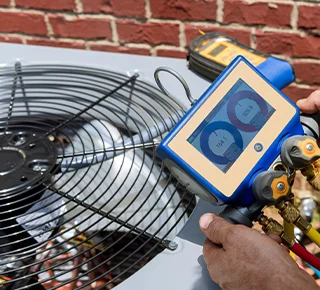
- Commissioning with real readings (static pressure, superheat, subcooling) catches low airflow and charge errors that erase efficiency.
On a typical older single-stage system with leaky returns, it is common to see 15 to 30 percent kWh reduction after a right-sized replacement and duct corrections, with comfort you can feel the first week.
When Repair Still Makes Sense
- The system is 10 to 12 years old, has a clean coil and drain, and only needs a modest part, like a capacitor or contactor.
- Airflow is strong, humidity feels right, and bills are stable year over year.
- You plan to sell the home within a year, and the equipment passes a basic inspection.
- The failure is small and does not point to larger damage, like a one-time float switch trip from a drain clog you now keep clean.
In these cases, fix it, then schedule a true tune up that includes coil, drain, static pressure, and control settings.
When Replacement Is The Smart Money
- Compressor failure on a 12 to 15 year old unit.
- Refrigerant leaks in coils that are out of warranty, especially on legacy refrigerants.
- Repeat capacitor and contactor failures paired with high kWh and comfort complaints.
- Units that need aggressive thermostat setbacks to feel normal at night.
- Systems with known duct and return problems that will keep killing parts.
If you are replacing, spend your money where it counts. Do a room-by-room load calculation, correct returns and crushed runs, install a sealed media cabinet, and commission the new system with real numbers.
How To Talk To A Contractor Without Getting Lost
Ask for these four items in writing. You will separate pros from guessers in one visit.
- Load calculation summary with sensible and latent totals.
- Airflow plan showing target CFM, return sizes, and static pressure targets.
- Scope of duct and return corrections, not just a box swap.
- Commissioning sheet with static, temperature split, superheat, and subcooling after install.
If you only get a model number and a price, you are buying a label, not a result.
Example Paths That Work
Path A: Keep It, Fix It Right
- Replace a failing capacitor and contactor.
- Clean coil and drain, seal the filter cabinet, and verify static.
- Program the thermostat for fan Auto and gentle dehumidify if supported.
Outcome: Bills steady, better moisture control, another season or two of reliable service while you plan.
Path B: Replace And Reset The Table
- Right-size variable speed or two-stage equipment.
- Add return capacity, seal returns, straighten crushed flex.
- Install a 4 to 5 inch media cabinet.
- Commission with documented readings.
Outcome: Drier air at a higher set point, quieter operation, and a noticeable drop in kWh.
Frequently Asked Questions
Will a higher SEER2 rating guarantee lower bills?
Only if airflow, charge, and ducts are correct. A right-sized mid to high SEER2 system with proper commissioning usually beats an oversized high-SEER system installed on leaky returns.
Can I just replace the condenser?
Mixing old indoor coils with new outdoor units often creates performance and reliability issues. Match indoor and outdoor equipment, then set charge and airflow by the book.
Do maintenance plans really help at this age?
Yes. Clean coils, clear drains, and verified static pressure prevent the small failures that snowball in heat. Plans also catch weak parts before a weekend breakdown.
How do I factor rebates or credits?
Apply them to the replacement price before you compare to the 40 percent rule. If incentives are strong, replacement can make sense at a lower repair threshold.
The Bottom Line
Use your bills, your repair history, and how the home actually feels. If energy use is climbing, repairs are stacking up, and comfort is slipping, you are paying twice, once on parts and again on the power bill. A right-sized, well-commissioned system with sealed returns lowers costs without sacrificing comfort. If your numbers look steady and comfort is strong, fix the small stuff and keep rolling.
Call For Straight Answers And Clear Numbers
If you want a side-by-side repair versus replace comparison based on your bills, repairs, and comfort goals, call to schedule an evaluation. We will document the load, airflow, and real readings, then give you options that make sense for your home and budget. Florida Air, Inc. will follow through with clear pricing, proper commissioning, and a result you can feel.