
You open your electric bill and do a double-take. $350? $400? Sometimes even $500+ during Florida’s peak summer months? You haven’t changed your habits, your thermostat is set to the same temperature as always, yet your bills keep climbing higher each year.
Before you blame Florida’s heat or your electric company’s rates, the real culprit is often hiding in plain sight: your HVAC system. Your air conditioner accounts for 40-60% of your summer electric bill in Florida, and even small efficiency problems can add $50-150 per month to your costs. The worst part? Most of these issues develop gradually, so you don’t notice the steady increase until your bill becomes shocking.
Here are the seven hidden HVAC problems that are quietly draining your wallet, how to identify them, and what you can do to fix them before next month’s bill arrives.
1. Dirty Air Filters (The $50-100/Month Problem)
This is the most common and most preventable cause of high electric bills. A clogged air filter forces your AC to work exponentially harder to pull air through the system, sometimes increasing energy consumption by 15-30%.
How it costs you money: When your filter is clogged, your blower motor runs at maximum capacity constantly, using far more electricity. Your system also runs longer cycles to achieve the same cooling, compounding the waste. On a typical 3-ton system, a dirty filter can add $50-100 to your monthly bill.
How to identify it: Pull out your air filter and hold it up to a light. If you can’t see light passing through, it’s too dirty. Even if some light passes through, if it looks noticeably dusty or discolored, it needs replacement.
The fix: Replace filters every 30 days during heavy use months (May through October in Florida). If you have pets, smoke indoors, or live in a dusty area, check them every 2-3 weeks. Quality pleated filters cost $15-25 but save you 3-5x that in electricity costs.
Prevention tip: Set a recurring reminder on your phone for the first of each month. Many smart thermostats also include filter change reminders based on actual run time.
2. Refrigerant Leaks (The Silent Budget Killer)
Refrigerant is the substance that actually removes heat from your air. When your system is even 10-15% low on refrigerant due to a slow leak, efficiency drops dramatically while your compressor works overtime trying to compensate.
How it costs you money: A system running with low refrigerant can use 20-40% more electricity while providing less cooling. You’re literally paying more to be less comfortable. Even worse, low refrigerant causes your compressor to run hotter, shortening its lifespan and leading to a $1,500-3,000 replacement down the road.
How to identify it: Look for these warning signs of refrigerant problems:
- Ice forming on your indoor unit or refrigerant lines
- System runs constantly but house stays warm
- Hissing or bubbling sounds near refrigerant lines
- Indoor humidity levels feel higher than normal
- Bills have increased 20-30% without explanation
The fix: Refrigerant leaks require professional repair. A technician will locate the leak, repair it, and recharge your system to the proper level. Costs typically range from $400-800 depending on leak location, but the repair pays for itself in 2-4 months through reduced electric bills.
Important note: Simply adding refrigerant without fixing the leak is wasteful and harmful to the environment. If a technician suggests just “topping off” your system without leak detection, find a different company.
3. Dirty Condenser Coils (The Gradual Efficiency Thief)
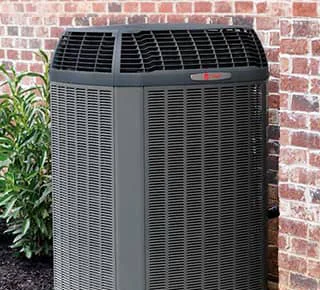
Your outdoor unit’s condenser coils release the heat your AC removes from your home. When these coils become coated with dirt, grass clippings, pollen, and debris (common in Florida’s environment), they can’t release heat efficiently, forcing your entire system to work much harder.
How it costs you money: Dirty condenser coils can reduce efficiency by 20-30%, directly translating to 20-30% higher electric bills. A system that should cost $200/month to operate might cost $250-280 with dirty coils — an extra $600-960 per summer.
How to identify it: Walk outside and look at your condenser unit. The fins (thin metal slats) should look relatively clean. If they’re packed with dirt, grass, leaves, or cottonwood seeds, or if you see dirt buildup between the fins, your coils are dirty and costing you money.
The fix: Professional coil cleaning costs $100-200 and should be done at least once per year in Florida (twice annually is better for coastal areas or homes near construction). This service typically pays for itself in reduced electric costs within 1-2 months.
DIY option: With the power off, you can gently spray the coils from inside-out with a garden hose. Never use a pressure washer as it will bend the delicate fins. However, professional cleaning reaches deeper buildup that a hose can’t remove.
4. Leaky or Disconnected Ductwork (The Hidden 30% Waste)
The U.S. Department of Energy estimates that 20-40% of cooled air escapes through leaks, gaps, and disconnected sections in typical ductwork. In Florida, where ducts often run through hot attics reaching 130-150°F, this problem is even worse.
How it costs you money: When cooled air leaks into your attic or walls instead of reaching your living spaces, your AC runs longer to compensate. If 30% of your cooled air is escaping, you’re essentially throwing away 30% of your electric bill — potentially $60-120 per month.
How to identify it: Warning signs of ductwork problems include:
- Some rooms are significantly warmer than others
- Visible gaps or disconnections in accessible ductwork
- Dust buildup around vent registers
- Whistling sounds coming from vents or ducts
- Your attic feels oddly cool (meaning cold air is leaking there)
- Electric bills are high despite properly functioning equipment
The fix: Professional duct sealing costs $500-1,500 depending on home size and accessibility, but can reduce cooling costs by 20-30%. In many cases, the improvement pays for itself in 1-2 years through lower bills. Some utility companies offer rebates or financing for duct sealing.
Why this matters in Florida: When your ducts leak into a 140°F attic, your AC must overcome that extreme temperature differential. Sealed ducts mean every dollar you spend on cooling actually cools your living space.
5. Thermostat Problems (The Invisible Overcooling Trap)
A malfunctioning thermostat can cause your AC to run when it shouldn’t, cool below the set temperature, or fail to sense your home’s actual temperature, leading to constant operation and wasted energy.
How it costs you money: If your thermostat reads 2-3 degrees warmer than actual temperature, your AC runs constantly trying to reach an already-achieved target. Some older thermostats also lose calibration over time, causing similar problems. The result can be 10-20% higher electric bills.
How to identify it: Check these warning signs:
- Place an accurate thermometer next to your thermostat — if they differ by more than 2 degrees, your thermostat is miscalibrated
- Your AC runs constantly even when the house feels cold
- Different thermostats in your home show significantly different temperatures
- The thermostat is in direct sunlight or near heat sources (kitchen, lamps)
- It’s more than 10 years old and has never been replaced
The fix: Thermostat replacement costs $150-500 depending on model. A programmable or smart thermostat not only fixes calibration issues but also allows you to set schedules that automatically reduce cooling when you’re away or sleeping, potentially saving 10-20% on cooling costs.
Smart thermostat benefits: Modern smart thermostats learn your schedule, provide energy reports, and can be controlled remotely. Many Florida utility companies offer rebates of $50-125 for smart thermostat installation, reducing your out-of-pocket cost.
6. Undersized or Failing Ductwork Insulation
Florida building codes require ductwork in unconditioned spaces (attics, crawl spaces) to be insulated, but insulation degrades over time, gets compressed, or may have been inadequate from the start. When hot attic air conducts through your ducts, your 58°F cooled air can warm to 70°F+ before reaching your vents.
How it costs you money: Poor duct insulation forces your AC to produce colder air and run longer to achieve the same indoor temperature. This can increase cooling costs by 15-25%. For every 1 degree your cooled air warms in the ducts, you lose about 3-5% efficiency.
How to identify it: Warning signs include:
- Ducts visible in your attic have thin, compressed, or damaged insulation
- Ducts feel warm to the touch in unconditioned spaces
- Rooms furthest from the air handler are hardest to cool
- Your attic ducts have moisture or condensation on them
- Air from vents isn’t as cold as it should be (below 55-60°F)
The fix: Re-insulating or adding insulation to ductwork costs $1,000-3,000 depending on accessibility and duct length. While not cheap, this upgrade typically reduces cooling costs by 15-20% and pays for itself in 3-5 years. In some cases, it’s covered by energy efficiency rebate programs.
Florida consideration: With attic temperatures reaching 140-150°F in summer, proper duct insulation is critical. Even R-6 insulation (common in older homes) is often inadequate; R-8 or higher is recommended for Florida attics.
7. An Aging, Inefficient System (The Slow Decline)
HVAC systems don’t suddenly become inefficient — they decline gradually. A system that was 14 SEER when new might operate at only 10-11 SEER after 10-15 years due to normal wear, minor refrigerant loss, dirt buildup, and component degradation. This slow decline means you don’t notice the efficiency drop until your bills are significantly higher.
How it costs you money: A 10-year-old system might use 20-30% more electricity than it did when new, and 40-60% more than a modern high-efficiency system. If your system is 15+ years old, you could be paying $100-200 more per month than necessary.
How to identify it: Consider these factors:
- Your AC is 12+ years old
- Bills have gradually increased over several years despite similar usage
- The system requires repairs more frequently
- It’s a 10-13 SEER unit (older, less efficient rating)
- You’ve been told multiple times to “just add refrigerant”
- The outdoor unit sounds louder than it used to
The fix: Modern high-efficiency systems (16-20 SEER) can cut cooling costs by 30-50% compared to older 10-13 SEER units. While replacement costs $4,000-8,000, the energy savings combined with fewer repairs often results in positive cash flow within 3-5 years.
Making the decision: Use the “5,000 rule” — multiply the repair cost by the system age. If the result exceeds 5,000, replacement is usually more economical. For example, a $500 repair on a 12-year-old system: 500 × 12 = 6,000 (replace). A $300 repair on a 7-year-old system: 300 × 7 = 2,100 (repair).
Additional Money-Saving Factors
Beyond these seven hidden problems, several other factors significantly impact your bills:
Air leaks in your home: Gaps around windows, doors, and electrical outlets let hot, humid air in, forcing your AC to work harder. Sealing these leaks costs $100-300 and can reduce cooling costs by 5-15%.
Poor insulation: Inadequate attic insulation (Florida homes should have R-30 to R-49) allows heat to radiate into your living space. Adding insulation costs $1,500-3,000 but can reduce cooling costs by 10-20%.
Thermostat settings: Each degree below 78°F increases cooling costs by 3-5%. Setting your thermostat to 72°F instead of 78°F can increase your bill by 18-30%.
Window treatments: Closing blinds and curtains on sun-facing windows during peak hours reduces solar heat gain by up to 30%, allowing your AC to run less.
What’s Normal for Florida Electric Bills?
To put your bills in perspective, here’s what’s typical for Florida homes:
Average summer bills by home size:
- 1,000-1,500 sq ft: $150-250/month
- 1,500-2,000 sq ft: $200-300/month
- 2,000-2,500 sq ft: $250-350/month
- 2,500-3,000 sq ft: $300-450/month
- 3,000+ sq ft: $400-600/month
If your bills significantly exceed these ranges for your home size, you likely have one or more of the problems described above.
How to Track Down Your Problem
If you’re not sure which issue is driving your high bills, follow this systematic approach:
Week 1:
- Replace your air filter
- Clean visible debris from outdoor unit
- Ensure all vents are open
- Close blinds during peak sun hours
- Monitor your bill
Week 2:
- Check thermostat calibration with a separate thermometer
- Inspect visible ductwork for obvious gaps
- Look at outdoor coils for dirt buildup
- Note if any rooms are much warmer than others
Week 3:
- If bills are still high, schedule a professional HVAC inspection
- Request a comprehensive efficiency evaluation
- Ask about utility company energy audits (often free or low-cost)
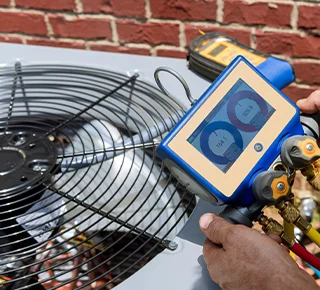
Professional evaluation: A thorough HVAC inspection costs $75-150 but identifies exactly where you’re wasting money. Many companies apply this fee toward repairs if you proceed with service. You may reach out to HVAC experts near your area to guide you with your concerns.
The Real Cost of Ignoring These Problems
Delaying these fixes doesn’t just waste money month after month — it accelerates equipment failure:
- Dirty filters and coils cause compressor failure ($1,500-3,000 to replace)
- Low refrigerant destroys compressors and shortens system life by years
- Duct leaks make systems work harder, reducing lifespan by 30-40%
- Overworked systems fail 3-5 years sooner than well-maintained ones
The $500-1,000 you might spend addressing these issues typically saves you $600-1,800 per year in electricity costs plus thousands in avoided early replacement costs.
Take Action Today
Don’t wait for next month’s shocking bill. Start with the simple fixes (filter replacement, cleaning outdoor unit) and schedule an inspection from HVAC experts if problems persist. Most efficiency issues pay for themselves in reduced bills within a few months, making this one of the smartest investments you can make in your home.