If your thermostat says Cool but the vents feel warm, you are not alone. I have seen this across Florida homes for years. Sometimes the fix is as simple as a thermostat setting. Other times a stuck reversing valve or a failed outdoor component needs attention. The good news is you can sort the simple from the serious with a few safe checks. I will show you what to try first, what to look for outside, and what we test on a service call so you get cold air back without guesswork.
First Things To Check Before You Call
Start with the items that solve a surprising number of warm air complaints.
Confirm thermostat mode and fan
Make sure the thermostat is set to Cool and the fan is set to Auto. Fan On can blow room temperature air between cycles and make it feel like warm air. Auto runs the blower only when the system is cooling.
Drop the set point
Lower the set point three to five degrees below room temperature. Give the system five full minutes. Heat pumps take a moment to start and build pressure.
Replace the air filter
A clogged filter starves the indoor coil of airflow. That can cause weak or warm air at the vents. Install the correct size filter with a snug fit and no gaps around the frame.
Look for a tripped safety switch
If your air handler has a float switch on the drain pan or cleanout, a clogged condensate line can shut cooling down. The blower may run, but the outdoor unit stays off and the air feels warm. If you see water at the pan or a wet area near the unit, stop and schedule service.
Check breakers once
Check the air handler and condenser breakers. Reset a tripped breaker one time only. If it trips again, leave it off and call for service.
If none of these restore cold air, move on to a quick outdoor check.
What To Look For At The Outdoor Unit
Walk out to the condenser while the thermostat is calling for cooling.
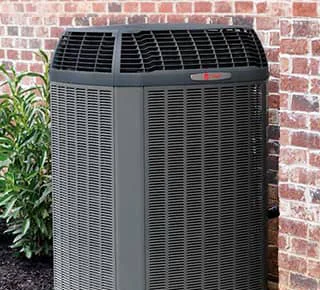
Outdoor fan and compressor status
You should hear the fan and a steady hum from the compressor. If the fan spins but there is no deeper compressor sound, the system may not be moving refrigerant. If the fan does not spin at all, the condenser is not running and you will only get warm air from the vents.
What this points to:
- Failed capacitor or contactor
- Tripped high-pressure or low-pressure safety
- Control board or low-voltage signal problem
- Miswired thermostat signal on heat pumps
Feel the larger refrigerant line
Carefully touch the insulated larger copper line at the outdoor unit. In proper cooling, that line should feel cool to cold with some condensation. If it feels warm or room temperature, the refrigerant is not doing its cooling job. If the small bare copper line is very hot and the fan is not running, shut the system off and call. Do not keep running a condenser that is not moving air across the coil.
Listen for rapid clicking or buzzing
Repeated clicks, a loud buzz, or a quick on off pattern hints at a relay, capacitor, or compressor that is trying and failing. Continued attempts can damage parts, so shut it down and schedule a check.
Why Heat Pumps Blow Warm Air In Cooling Mode
Now, the common causes I find on warm air calls, in plain English.
Reversing valve stuck in heat
Heat pumps use a reversing valve to flip the flow of refrigerant between heat and cool. If the valve sticks in the heat position, the indoor coil acts like a heater even when the thermostat calls for cooling. You will get warm air from the vents and the outdoor unit may run normally.
Clues
- Air is clearly warm, not just room temperature
- Outdoor unit sounds normal, indoor coil lines feel wrong for cooling
- Issue often appears after a power surge or after the system has been idle
Thermostat misconfigured for O or B
Heat pumps use an O or B signal to shift the reversing valve. Some brands energize the valve in cooling. Others energize in heating. A smart thermostat set to the wrong option will make the unit heat when you want cool.
Clues
- Recent thermostat change or smart stat upgrade
- System cools fine when R is jumped to Y at the control board, but not from the thermostat
- Everything else tests normal
Outdoor unit not running
If the indoor blower runs and the outdoor unit is off, the system cannot move heat out of the house. You get room temperature to warm air at the vents.
Common reasons
- Bad capacitor or contactor
- Tripped pressure switch
- Failed condenser fan motor
- Low-voltage fuse blown at the air handler board
- Broken or chewed low-voltage wire to the condenser
Low refrigerant charge or metering problem
Low charge reduces pressure in the evaporator and can create odd symptoms. In some cases the indoor coil freezes, then you get warm air while the ice melts. A stuck or dirty metering device can cause the same trouble.
Clues
- Weak airflow or a whooshing sound at the supply right before air warms
- Frost on the larger insulated line near the air handler
- Water near the air handler from melted ice
- Long run times with poor cooling
Dirty indoor coil or blower wheel
Dust and film on the coil reduce heat transfer and make the coil temperature drop. The system may run, but you feel little cooling. As the coil loads with moisture and dirt, air can feel warm because the blower cannot move enough air across the coil.
Return leaks and high attic infiltration
A gap in the return pulls hot attic air into the system. That raises the temperature at the coil, overloads dehumidification, and can make vent air feel warmer. It also raises indoor humidity and makes the whole house feel sticky.
Control board or sensor fault
Modern heat pumps rely on boards and sensors to manage defrost and staging. A failed sensor or board can confuse the system and deliver the wrong mode.
What You Can Safely Do Right Now
- Set the thermostat to Cool and Fan Auto
- Replace the filter with the correct size
- Open supply and return grilles and crack bedroom doors for better return air
- Inspect the outdoor unit for obvious debris and clear two feet around the coil
- If you see frost or ice on the lines, turn the system off and let it thaw for four to six hours, then try again
- If the outdoor fan does not spin or a breaker trips twice, leave the system off and schedule service
Do not press contactors by hand. Do not keep resetting a breaker that trips. That can turn a small part failure into a bigger repair.
How We Diagnose Warm Air From A Heat Pump
When we arrive, we follow a simple process that points straight to the fault.
Interview and quick checks
We ask what changed, look at the thermostat model and settings, and confirm O or B selection on heat pumps. We check for a blown low-voltage fuse at the air handler board.
Electrical and component tests outside
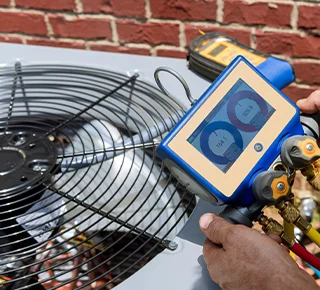
We test capacitors, contactors, fan motors, compressor amps, and incoming voltage. We confirm low-voltage is present at the contactor coil when cooling is called.
Reversing valve test
We energize the valve and watch pressures. A stuck valve shows up as pressures that do not shift with mode changes. Sometimes a light tap frees a sticky slide, but a repeat offender needs replacement.
Refrigerant and metering checks
We record superheat and subcooling and compare to targets. Low charge, a restricted filter drier, or a metering issue stands out quickly when readings are taken correctly.
Airflow and coil inspection
We check the indoor coil face and blower wheel. Dust mats and biofilm are easy to spot. We measure static pressure to judge duct restrictions and return health.
Control logic and sensors
On communicating systems, we check error codes, sensor readings, and defrost logic. We update firmware where supported and verify the board responds to calls correctly.
Repairs That Solve Warm Air Problems
Reversing valve or coil replacement
If the valve is stuck or leaking internally, we replace the valve and the solenoid coil, then evacuate and weigh in the correct charge. This returns the unit to proper mode control.
Thermostat correction or rewiring
We set the correct O or B setting, confirm heat pump configuration, and connect a true common wire for stable power. This removes the most common smart thermostat mistake we see.
Outdoor component repairs
We replace failed capacitors, contactors, and fan motors, and correct any damaged low-voltage wiring. We test pressures and amps after each repair.
Refrigerant charge and leak repair
We find and fix leaks, replace the filter drier, evacuate to proper levels, and charge by weight. We verify superheat and subcooling against spec, so you leave with a matched charge, not a guess.
Coil and blower cleaning
We clean the indoor coil with the right non-acidic cleaner, clean the drain pan and trap, and remove the blower wheel for a proper wash when needed. Airflow and cooling return to normal.
Return sealing and filter cabinet upgrade
We seal return boxes and racks with mastic, then install a deep media filter cabinet so you get strong filtration with low resistance. That protects the coil and improves comfort.
How To Prevent A Repeat
- Check filters monthly and change on schedule
- Keep the fan on Auto so the coil can drain between cycles
- Trim shrubs and keep two feet of clearance around the condenser
- Schedule coil and drain service each spring
- Add surge protection at the condenser and main panel to protect boards
- If you upgrade thermostats, use a true common wire and set O or B correctly
- Seal return leaks so attic air does not load the system with heat and humidity
Answers To Common Questions
Why does it feel warm only part of the time
A sticky reversing valve can shift in and out. A low charge can let the coil freeze, then thaw. A thermostat with the wrong O or B setting can flip modes after a power blip. Intermittent warm air is a clue that control or refrigerant issues are involved.
Can I hurt the system by running it when it is blowing warm
Yes. If the outdoor fan is not running or pressures are wrong, parts overheat. If the coil is iced, the compressor can slug liquid after a short thaw. If vent air is warm for more than a few minutes, shut it off and call.
Do smart thermostats cause this
Smart stats are fine when installed correctly. The most common mistake is selecting the wrong heat pump reversing valve setting. The second is trying to run without a true common wire, which causes random reboots and control faults.
How long should it take to get cool air after a repair
Most homes feel the difference within minutes once the outdoor unit and reversing valve work correctly and the charge is set. Full humidity recovery can take a few hours if the house was humid.
The Bottom Line
Warm air from a heat pump set to Cool is not a mystery. The mode may be wrong at the thermostat, the reversing valve may be stuck, the outdoor unit may be down, or refrigerant and airflow need attention. Handle the simple checks first, then let a pro test the parts and the pressures. With the right diagnosis, you will have steady cold air, lower humidity, and a system that starts and runs the way it was built to.
Call Florida Air, Inc.
If your vents feel warm when you need cooling, we can help. Call Florida Air, Inc. for a fast diagnostic, a clean repair, and a setup that protects your comfort in Florida’s heat and humidity. We offer after-hours emergency service, free in-home estimates on new systems, and a 30-day warranty on service repairs. Ask about our maintenance plans and our 10 year parts warranty on new installations. Your comfort is our business, and we are your hometown team for hometown service.